
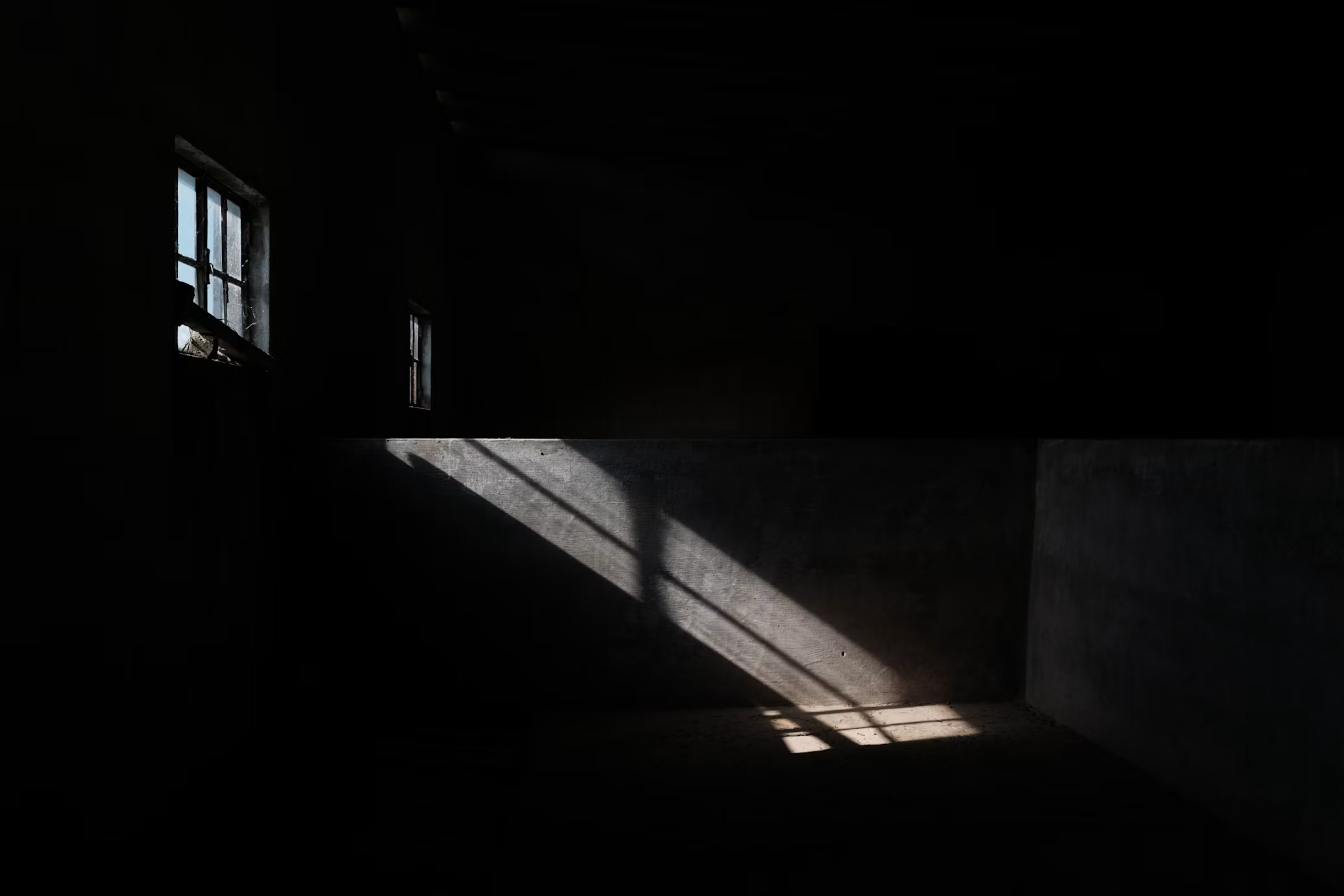
There is something magical about a room with no light—until a small beam of sunlight finds its way through a window.
For photographers, these moments can create some of the most beautiful and atmospheric photographs. A dark room can become a canvas, with the light from a window acting as the paint. The contrast between deep shadows and a narrow shaft of light can create mood, mystery, and a sense of quiet that is difficult to reproduce with artificial lighting.
Look for the Light
When photographing light coming through a window, resist the temptation to brighten the entire room.
The darkness is part of the photograph.
Look for a window where sunlight enters the room at an angle. Early morning and late afternoon are often ideal because the sun is lower in the sky, producing longer and more directional shadows.
Dust, curtains, furniture, or other objects in the path of the light can make the beam visible and add depth to the image.
Expose for the Light
One of the biggest challenges is getting the exposure right. Your camera may try to brighten the dark room, which can cause the light coming through the window to become completely blown out.
Try exposing for the brighter area of the scene instead.
Underexposing the photograph slightly can help preserve detail in the window light while allowing the rest of the room to fall naturally into shadow. If you are shooting manually, start with a low ISO, a moderate aperture, and a shutter speed that gives you the exposure you want.
Don’t be afraid of black areas in the photograph. Shadows don’t always need detail. Sometimes they are what gives an image its atmosphere.
Use the Darkness to Simplify the Composition
A dark room gives you an opportunity to remove distractions.
Instead of trying to photograph everything in the room, look for one simple subject touched by the light. It might be a chair, a table, a plant, or even an empty section of the floor.
Position yourself so the light leads the viewer’s eye toward that subject.
The less you show, the more the viewer may wonder about what exists beyond the illuminated area.
Shoot in Black and White
This type of photograph can work particularly well in black and white.
Removing color emphasizes the relationship between light and shadow. Textures become more noticeable, and the photograph can take on a timeless, almost cinematic quality.
If you’re photographing in RAW, consider shooting in color and making the black-and-white conversion later. This gives you more flexibility during editing.
Don’t Be Afraid to Wait
Natural light changes constantly.
A few minutes can make a dramatic difference as the sun moves across the sky. The beam may shift across a wall, illuminate a different object, or become narrower and more defined.
Rather than taking one photograph and moving on, watch the light.
Wait for the moment when the relationship between the light, shadows, and subject feels right.
Embrace Imperfection
You don’t need expensive equipment to photograph beautiful window light.
In fact, a simple camera and lens can be more than enough. What matters most is recognizing the moment and understanding how exposure affects the mood of the photograph.
The next time you walk into a room that appears almost completely dark, don’t immediately turn on the lights.
Look at the window.
Look at where the light falls.
There may be a photograph waiting in that small patch of brightness.