
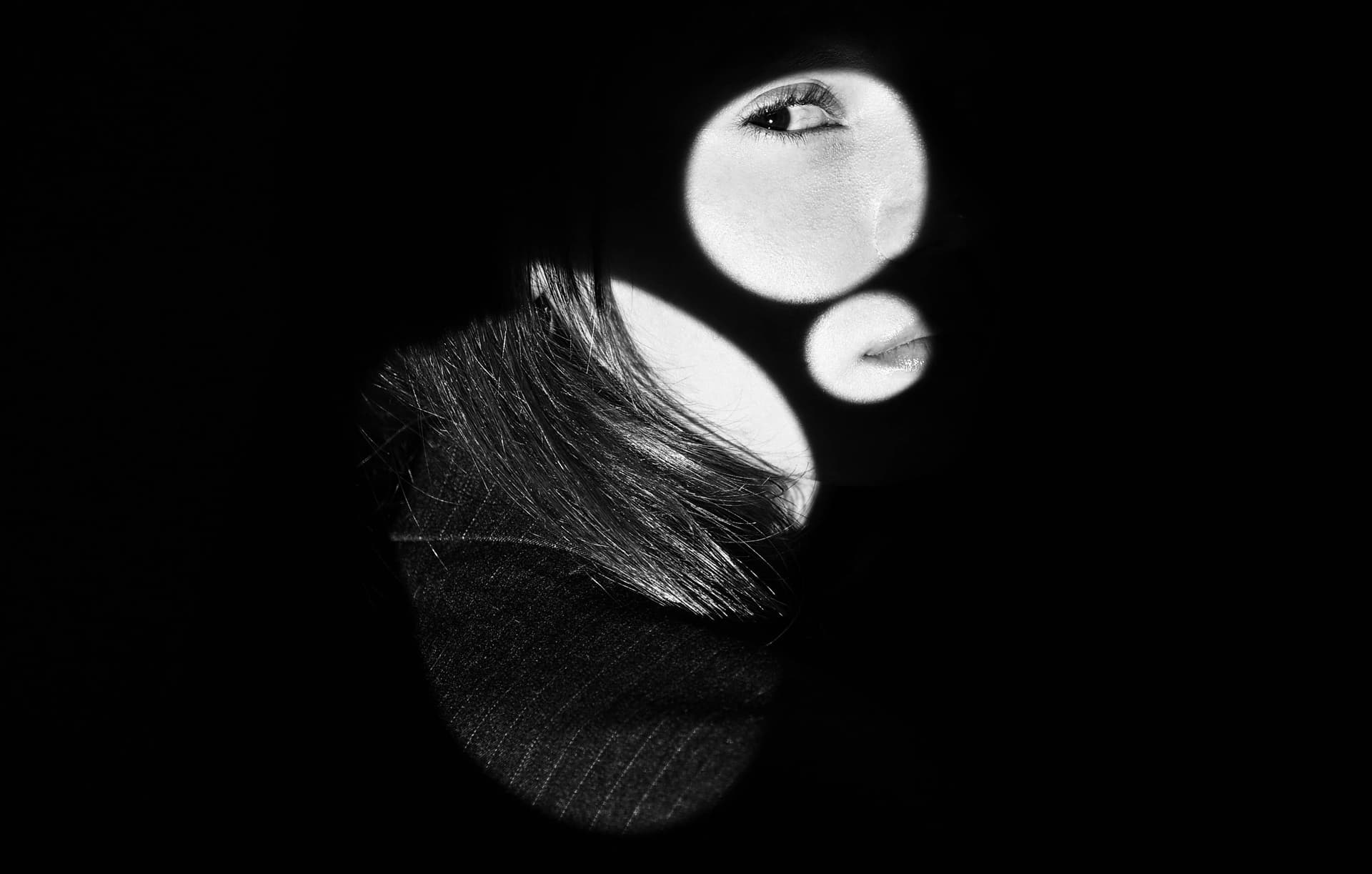
There is a distinct magic that happens when you strip away half a subject’s face. When you plunge a portrait into deep, intentional shadow and allow only a sliver of light to trace an eye, a cheekbone, or the corner of a mouth, photography stops being a simple record of a moment and becomes a mood.
This dramatic, high-contrast approach—often rooted in the principles of chiaroscuro—is known as low-key portraiture. By embracing darkness rather than fearing it, you can create images that command attention, evoke mystery, and instantly hook a reader browsing your site.
If you are looking to capture or feature an image where a single eye emerges from the dark, here is a complete guide to mastering shadow sculpting in your next photography session.
1. The Mindset: Painting with Darkness
Most portrait photography relies on filling the frame with light to reveal every detail. Low-key photography flips that philosophy on its head.
Instead of asking, “How do I light my subject?” start by asking, “What do I want to hide?”
Light is your scalpel, but shadow is your canvas. When you restrict illumination to a tiny percentage of the frame, every pixel of light matters exponentially more. The viewer’s imagination will naturally fill in the obscured details, making the visible elements—like the sharp catchlight in an iris—infinitely more powerful.
2. Gear and Setup: Keep It Minimal
You do not need an elaborate multi-light studio setup to sculpt shadows. In fact, fewer lights often yield better results because they prevent unwanted bounce and spill.
- The Light Source: A single off-camera speedlight, a continuous LED panel, or even a strategically cracked window blind will work. If you use a modifier, opt for a small softbox, a snoot, or a grid to keep your light tightly controlled.
- The Modifier Alternative: If you are shooting with natural light, position your subject perpendicular to a single light source in a dark room. Use a black V-flat or a piece of foam board on the shadow side to aggressively absorb any ambient bounce.
- Camera Settings: Shoot in manual mode. Meter for the brightest highlight on the subject’s skin or eye, and let the rest of the frame fall completely into underexposed shadow.
3. Step-by-Step Execution: Sculpting the Face
Achieving that razor-thin margin of visibility requires precise positioning. Follow these steps during your next shoot:
- Step 1: Anchor the Eye. The human eye is a natural focal point. Position your light source so that it creates a sharp, clean catchlight in the pupil. If the eye is dead or unlit, the entire illusion fails.
- Step 2: Feather the Light. Move your light source slightly forward or backward relative to your subject’s profile. You want the light to graze just the bridge of the nose, catch the peak of the cheekbone, and illuminate the upper lip, while leaving the eye socket and jawline in deep shadow.
- Step 3: Control the Spill. Watch your background. In true low-key portraits, the background should melt into pure, velvety black. Ensure your subject is standing several feet away from any walls so ambient light doesn’t bounce back onto them.
- Step 4: Focus Critically. With such shallow light and deep contrast, autofocus systems can sometimes hunt. Switch to manual focus or pinpoint single-point autofocus locked directly onto the eyelashes of the visible eye.
4. Post-Processing: Perfecting the Contrast
The camera capture is only half the battle. Bringing a low-key portrait to life in Lightroom or Photoshop requires targeted adjustments:
- Crush the Blacks: Lower your blacks and shadows sliders to ensure the dark areas clip cleanly into pure black, removing muddy gray tones.
- Dodge and Burn: Use a brush tool to subtly darken any stray ambient light on the shadow side of the face, while adding a tiny micro-contrast boost (clarity and texture) exclusively to the iris and eyelashes.
- Consider Monochrome: While color can work wonderfully if color-graded correctly (such as warm skin tones against cool shadows), low-key portraits often translate into timeless, punchy black-and-white images that emphasize pure texture and form.
Low-key portraiture forces both the photographer and the viewer to slow down. By hiding the majority of the subject, you invite the audience to lean in, study the micro-details, and appreciate the dramatic interplay between light and void.