
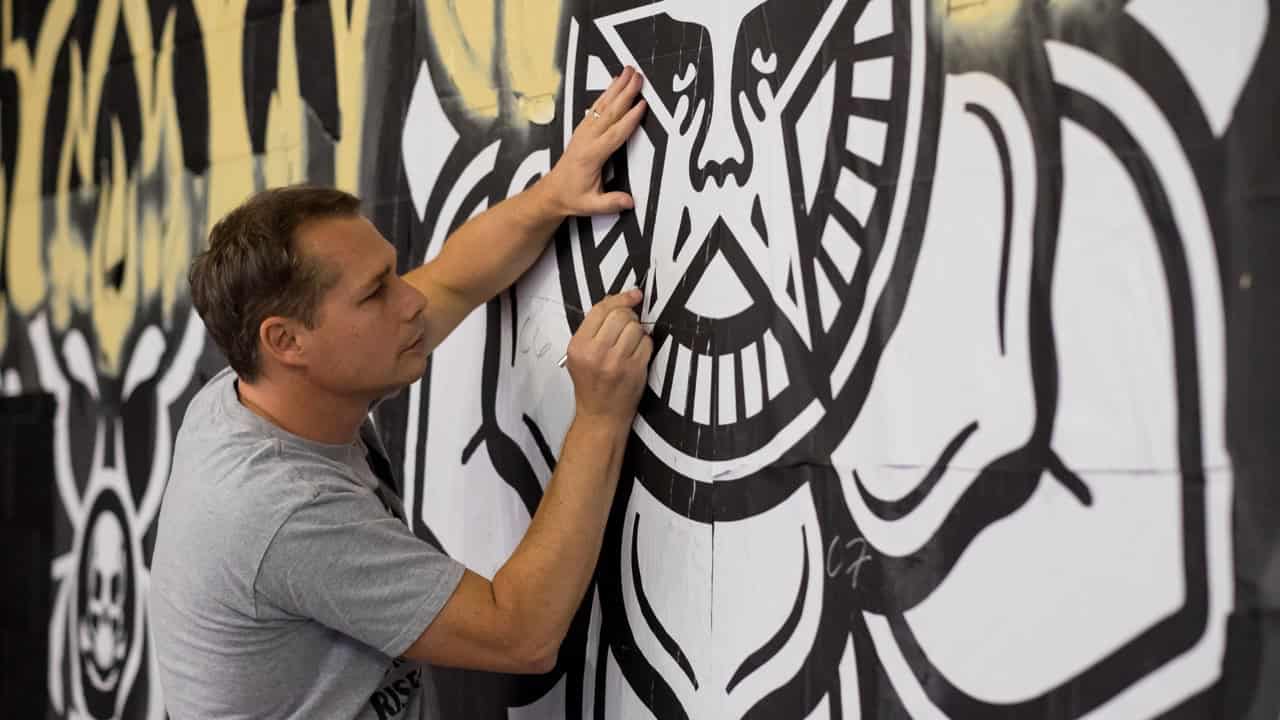
In February 2009, the iconic street artist Shepard Fairey—famous for his “Hope” poster supporting Barack Obama—found himself in legal trouble… right as his work was being celebrated in Boston.
The Arrest: A Sudden Disruption
- Date & Location: Fairey was arrested on the evening of February 6, 2009, while en route to the opening event of his solo exhibition “Supply & Demand” at Boston’s Institute of Contemporary Art (ICA).
- Reason: He was taken into custody on two outstanding warrants issued earlier on January 24 for tagging public property—namely locations near the BU Bridge and a Massachusetts Turnpike utility building. The warrants alleged graffiti activity connected to his Obey Giant campaign.
Amid the Celebration
Fairey had become an acclaimed figure in Boston’s art circles, even appearing alongside Mayor Thomas Menino in city media promoting his exhibit. His arrest—right before hundreds gathered for a sold-out ICA event—felt jarringly contradictory.
Even a cab ride didn’t save him: as soon as he neared the ICA, police pulled him over and arrested him—just before he was due to DJ at the opening.
Charges & Legal Journey
- Initial Charges: Fairey faced more than 30 counts related to vandalism, tagging, and destruction of property.
- Early Resolution: By April 2009, a Boston magistrate had dismissed seven of 17 charges due to insufficient evidence.
- Plea Deal & Outcome:
- Fairey pleaded guilty to three misdemeanor vandalism charges—one for defacing property, and two for wanton destruction of property valued under $250.
- The remaining 11 charges were dropped.
- He received two years’ probation, a $2,000 fine earmarked for graffiti removal, and restrictions on possessing “tagging materials” in Suffolk County unless part of authorized art.
- Conditions included notifying officials in advance of visits to Suffolk County.
Shepard Speaks: Reflection & Purpose
Fairey expressed relief at putting the incident behind him:
“I’m very happy that I’m gonna get to make art without this black cloud over my head…”.
He defended his street art, saying it was about connection and expression:
“Street art is a way to connect with an audience directly, without any bureaucracy. Being arrested is a risk I take…”.
He criticized Boston’s approach:
“It’s unfortunate that that’s how some people in the Boston Police Department thought that their time and resources should be used.”.
Artistic Freedom vs. Legal Boundaries
- With over a dozen arrests to his name, Fairey viewed this case as part of a recurring cycle for street artists—both the rebellion and the consequences that follow.
- His arrest sparked citywide debate:
- Supporters argued graffiti offers vital, non-commercial public expression.
- Critics emphasized property rights and legal order.
The Bigger Picture
Ultimately, Fairey’s experience in Boston underscored the persistent tension between street art as cultural expression—and its complexities when clashing with legal norms. His plea deal paved the way for clean-slate creativity and served as a fascinating chapter in the evolving story of graffiti as legitimate art.
Final Thoughts
Shepard Fairey’s Boston arrest was more than just a law enforcement incident—it represented a cultural intersection where activism, art, and authority collided. While his legal resolution allowed him to continue his work, the case prompted serious reflection on how creative expression fits into public space—and who gets to decide its limits.